


This article is part of a Soft Skills series created by ITech Progress, exploring why human judgement, critical thinking, and clear communication remain essential in software architecture in the age of AI.
In today’s software development landscape, technical expertise alone is no longer sufficient to design sustainable and adaptable architectures. Especially in complex projects, communication and social skills are becoming increasingly important. These include, in particular, clarity in communication, empathy, teamwork, and the ability to bring together different perspectives. They help software architects better understand requirements, identify conflicting goals at an early stage, and develop robust solutions in both business and technical contexts. This article demonstrates why these skills are becoming even more important in combination with AI and what this means in practice for development teams.
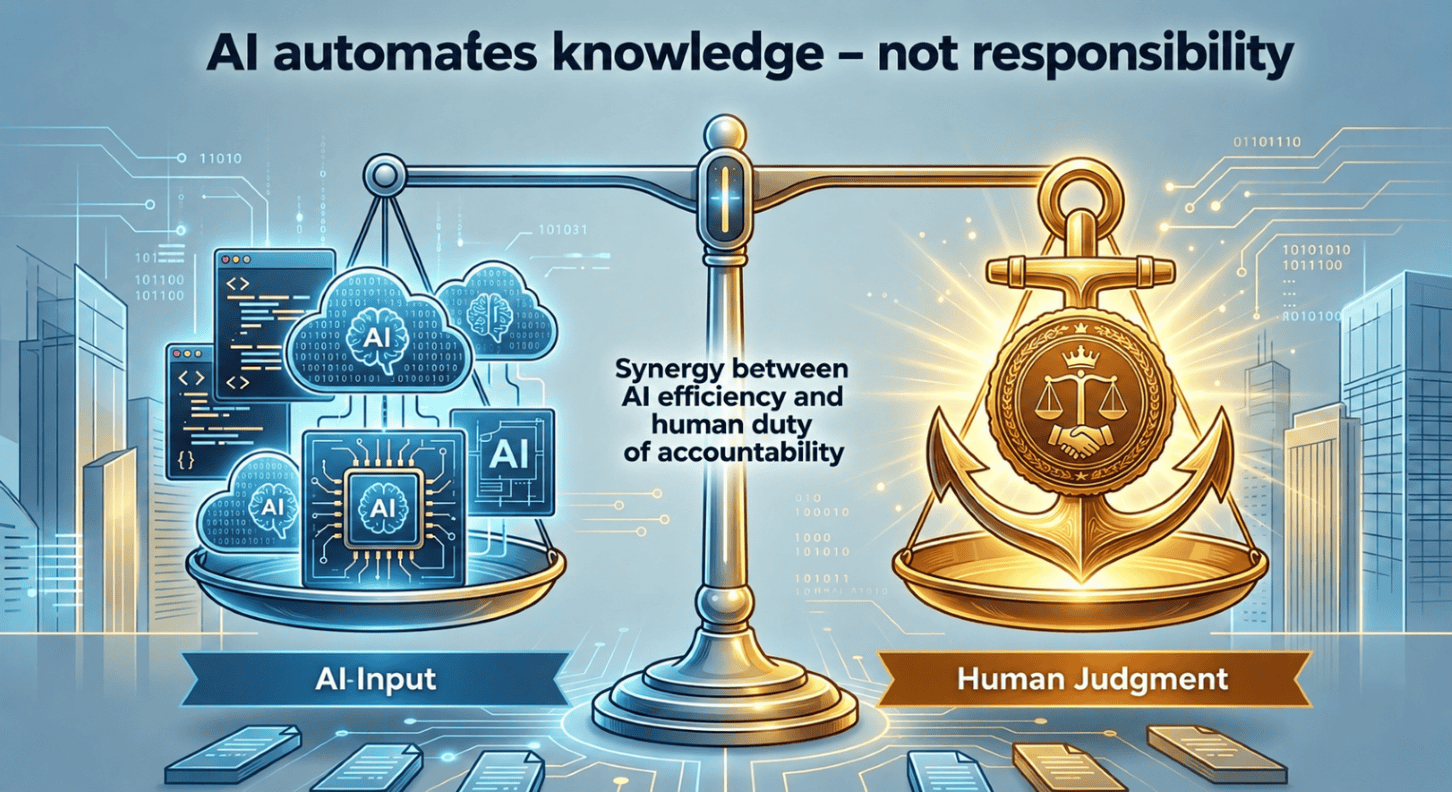
AI Automates Knowledge – Not Responsibility
Artificial intelligence is revolutionizing the world of work by automating knowledge and completing numerous tasks – such as generating code, architecture proposals, or analyses – in minutes rather than hours. However, while AI provides vast amounts of information and possible courses of action, responsibility for selecting and evaluating them still lies with humans. Artificial intelligence can support decisions, but it can never fully take them over.
As a result, the bottleneck is no longer access to information, but rather the ability to make sound judgments. Soft skills such as critical thinking, ethical reflection, and a sense of responsibility are therefore becoming increasingly important. Only through a conscious combination of AI-supported knowledge and human judgement can sustainable and responsible decisions be made. Responsibility does not emerge within the system itself, but in human judgement.
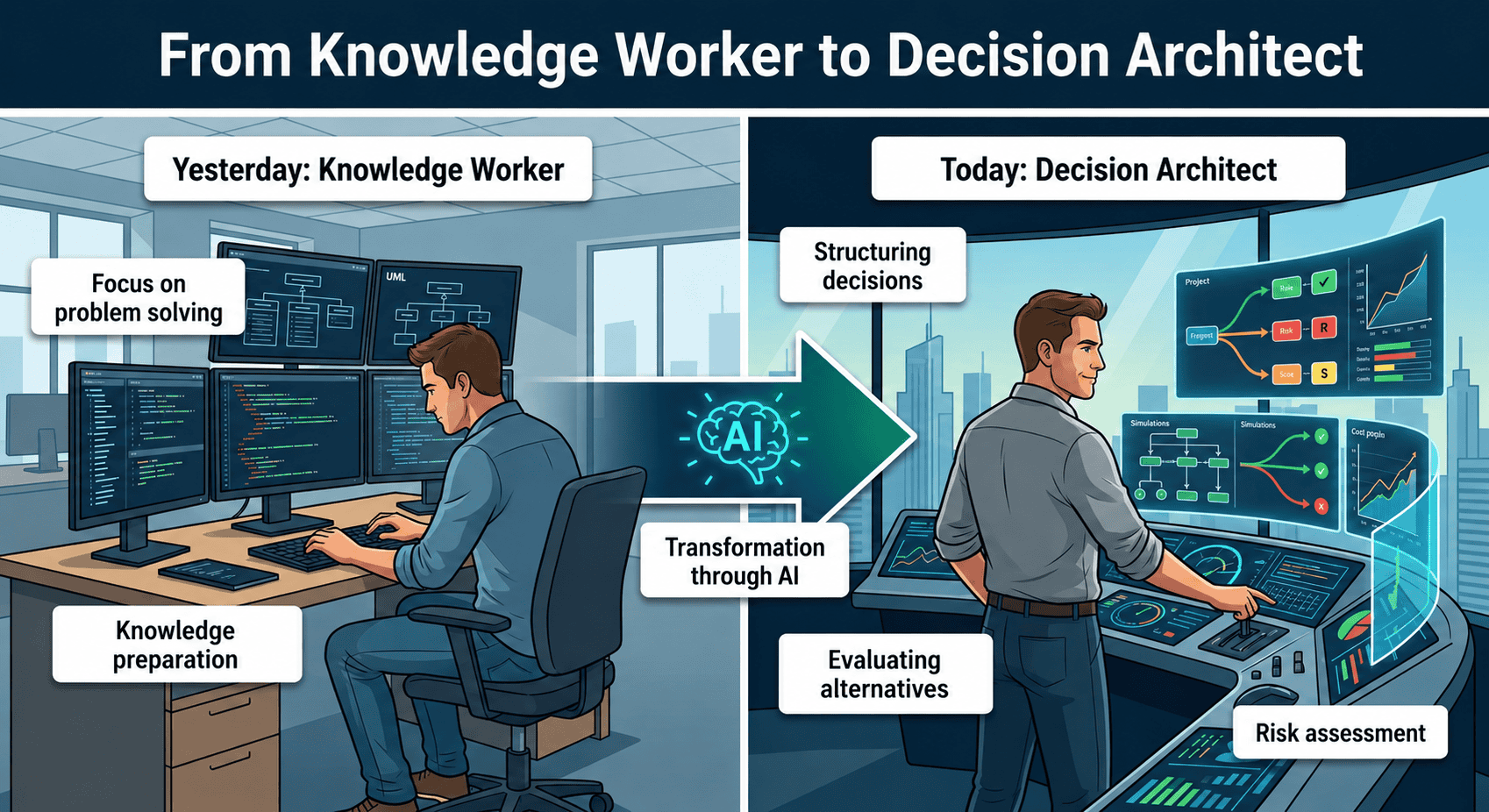
Where AI Excels – and Where It Reaches Its Limits
Modern artificial intelligence is impressive in its ability to recognize patterns, efficiently analyze enormous amounts of data, and generate high-quality text and code. It helps propose options and automate repetitive tasks, saving considerable time and resources, especially in software development.
Despite these strengths, however, AI remains limited wherever contextual understanding, responsibility, and value-based considerations become crucial. Software architecture clearly demonstrates how important human judgement remains when technical decisions have consequences far beyond the system itself.
AI can condense patterns and suggest options. Whether these options are viable and responsible within a specific context, however, remains a matter of human judgement. Sustainable architectural decisions arise where suggestions are not simply adopted, but consciously evaluated with regard to values, risks, and framework conditions.
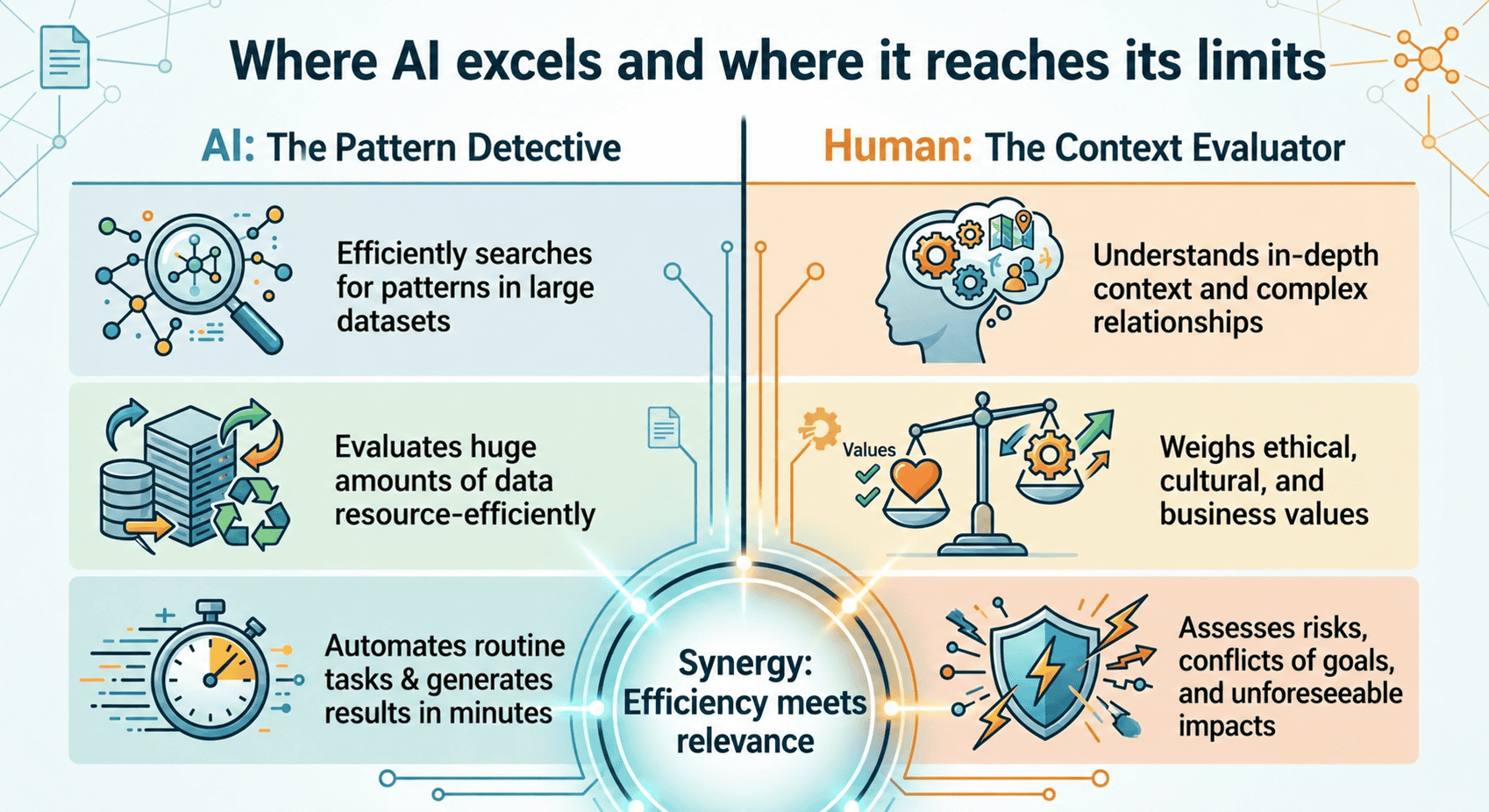
From Knowledge Worker to Decision Architect
The role of software architects is changing significantly. Instead of primarily providing knowledge or independently developing solutions, the focus today is increasingly on structuring decisions, weighing risks, and evaluating solution alternatives in a well-founded manner. The modern software architect is therefore becoming more and more of a decision architect.
This means that software architects are not only designing technical solutions, but are above all creating orientation in complex project environments. In such contexts, this role becomes a decisive factor because it forms the basis for sustainable and future-proof IT strategies. The ability to align technical possibilities with business requirements and to involve stakeholders in decision-making processes is what makes the difference.
As a result, the traditional knowledge worker evolves into a designer of decisions who contributes significantly to value creation through their understanding of technology and risk.
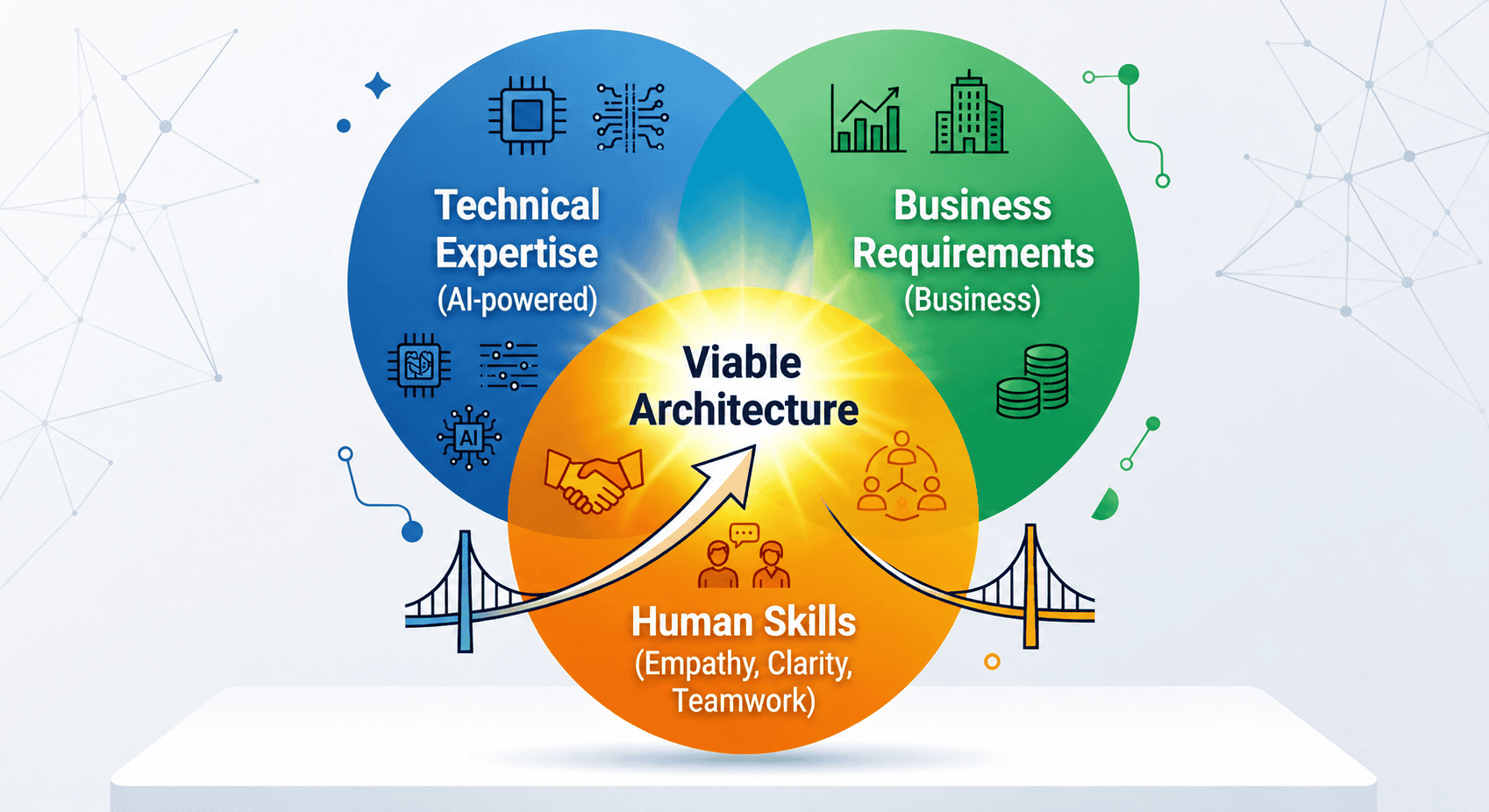
Decision-Making Under Uncertainty
The more artificial intelligence takes over routine tasks, the more important decision-making under uncertainty becomes as a soft skill. Technical excellence remains indispensable, but especially in complex and unpredictable situations, it is human competence that makes the difference.
Good decisions require not only sound knowledge, but also the ability to evaluate contradictory information and weigh risks, even when complete data is unavailable. Particularly in complex situations, it is essential to carefully consider impacts, risks, and conflicting objectives as part of the decision-making process.
In addition, clarity in communication strengthens shared understanding within teams and promotes systems thinking that integrates different perspectives. In the digital workplace, this combination of soft skills is becoming increasingly important for everyone who wants not only to react, but to actively shape the future.
Only those who can make confident decisions under uncertainty will be able to create long-term value and build trust.
Ultimately, it becomes clear that in the age of artificial intelligence, soft skills are more crucial than ever for software architects. Critical thinking enables them to carefully question AI-generated suggestions and team ideas, while consciously evaluating risks and conflicting goals. Clear communication ensures that complex issues are conveyed in an understandable way, enabling smooth collaboration within teams.
These core skills form the foundation for successfully mastering the challenges of modern software architecture.
Sources
- “AI Accountability: How Leaders Can Help Guide Software Development Decisions” – Forbes Council article (argues that competitive advantage is shifting toward judgement and ownership, not just AI-driven speed).
https://www.forbes.com/councils/forbesbusinesscouncil/2026/02/27/ai-accountability-how-leaders-can-help-guide-software-development-decisions/ - Navigating the Unknown: How to Make Architecture Decisions Under Uncertainty
https://scalewithchintan.com/blog/how-to-make-architecture-decisions-under-uncertainty - Uncertainty, Risk, and Information Value in Software Requirements and Architecture
https://earlbarr.com/publications/reqrisk.pdf
This is a translation of ITech Progress’ blog post “Wenn KI auf Kommunikation trifft, bleibt menschliche Urteilskraft entscheidend”. Here you can find the original blog post in German.