


APIs (Application Programming Interfaces) are ubiquitous today – in mobile apps, enterprise systems, and digital platforms. Despite their widespread use, however, they are often understood merely as technical interfaces. This view falls far short. APIs are strategic tools that enable organizations to modularize their IT landscapes, automate processes, and realize new business models. The following overview shows how APIs can be designed, described, and scaled – and why they should be seen as digital building blocks of a future-proof IT architecture.
The Value of APIs
The use of APIs fundamentally changes how software is conceived, developed, and operated. Instead of monolithic applications, we increasingly see interconnected systems in which specialized components interact via clearly defined interfaces. APIs enable targeted reuse and technological independence. In this role, they are not just technical tools but play a key part in aligning business concerns and technology – whether within internal IT or as part of digital platform strategies.
APIs are therefore far more than technical interfaces; they are strategic instruments for digitalization. They allow organizations to flexibly connect internal systems, efficiently integrate external partners, and create new digital business models. APIs establish a clear separation between the provision and consumption of functionality and data. This modular approach fosters innovation, reuse, and scalability. Their true value becomes evident when organizations deliberately design APIs along business goals and treat them as products – including maintenance, documentation, and governance.
API Styles and API Design
APIs can be designed in different ways. The most widely known style is REST, which addresses resources via HTTP and is commonly used for CRUD operations. GraphQL, on the other hand, offers greater flexibility for querying data, which is particularly advantageous for complex or mobile applications. Event-based APIs using messaging systems such as Kafka or MQTT are well suited for loosely coupled, reactive architectures. The choice of API style should always be driven by the usage context – not every solution fits every problem.
Good API design provides clarity, consistency, and predictability for its users. It starts with deliberate domain modeling: Which concepts are relevant? How are they addressed? Which operations are required? This is not just about technical details such as path structures or HTTP status codes, but primarily about clearly reflecting business logic. Principles such as consistency, simplicity, and separation of concerns help make APIs usable and maintainable. Early feedback from development teams – both API providers and consumers – is particularly valuable in this process.
Documentation and API Lifecycle Management
A precise description of APIs is essential to enable smooth usage by other teams or external partners. Modern API description formats such as OpenAPI or AsyncAPI provide machine-readable definitions that can be used for documentation as well as for generating code, tests, and mock servers. The so-called API-first approach improves collaboration between development, architecture, and business stakeholders. It creates a shared understanding of the interface even before implementation begins. With consumer-driven contract testing, defined contracts can be tested lightweight on both provider and consumer sides, ensuring compatibility during future changes. This helps prevent errors early and makes integrations more efficient.
APIs are not one-off projects but long-lived products. Their lifecycle spans conception, implementation, and operation through to evolution and eventual retirement. Structured lifecycle management helps ensure compatibility, manage versions transparently, and inform users about changes at an early stage. Tools for deployment, documentation, monitoring, and metrics support operation and further development. Usage feedback also plays a central role, enabling APIs to evolve in line with real-world requirements.
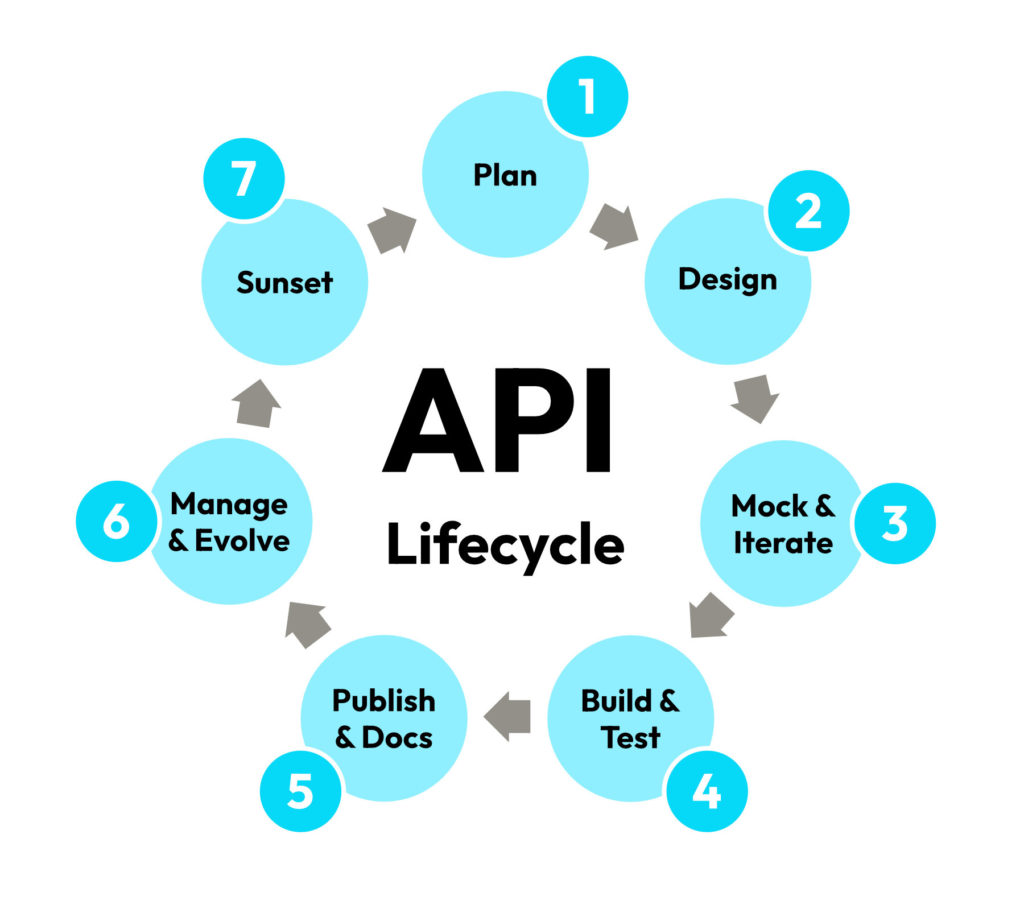
Figure 1: API lifecycle
API Security and APIs at Scale
APIs open up systems – and potentially new attack surfaces. Security must therefore be an integral part of any API strategy. Authentication and authorization form the first line of defense, complemented by protective mechanisms such as rate limiting, logging, validation, and monitoring. Standards like OAuth 2.0 or OpenID Connect have proven effective in practice. In addition to technical measures, organizational processes are needed to detect and address security incidents at an early stage. Security is not a one-time activity but a continuous operational concern.
As the number of APIs grows, so do the demands for structure and coordination. Topics such as reuse, consistency, and security can no longer be ensured by individual teams alone. This is where API governance comes into play: it defines guidelines, roles, and processes to ensure API quality and usability across the entire lifecycle. Complementary to this are platforms that centrally support API management – for example for versioning, monitoring, or access control. The goal is a scalable API ecosystem in which technological freedom and organizational guardrails are sensibly balanced.
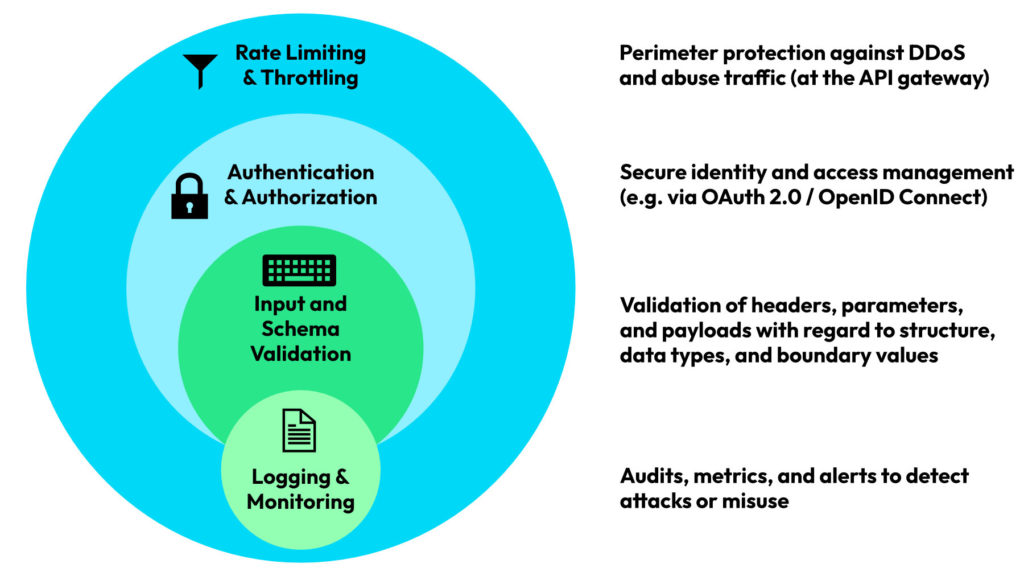
Figure 2: Security layers shown as an onion diagram (read from the outside in)
Conclusion
APIs are no longer a niche topic – they are fundamental building blocks of modern digital enterprises. Organizations that view APIs not just as a technical necessity but as a strategic resource can better steer IT investments, more closely involve business units, and more effectively foster digital innovation. This requires a conscious approach to the conception, description, operation, and scaling of APIs. Those who treat APIs as products and embed them within an organizational framework lay the foundation for sustainable digital business models.